
Williamsport City Directory Collections
The James V. Brown Library online-resources listing identifies Williamsport City Directories from 1866 through 1931. That is the verified collection span. The listing does not identify a publisher or provide a complete list of individual volume years, so a title page and the selected record image should be checked before a citation names either one. A gap between volumes is a research question, not evidence that a household left town.
| Collection | Years | Where Held | Access |
|---|---|---|---|
| Williamsport City Directories | 1866–1931 | James V. Brown Library historical archive | Public remote archive for public-domain and some cleared content; internal archive at the library for all content |
| Daily Gazette and Bulletin | 1869–1909 | James V. Brown Library archive | Digitized newspaper layer; searchability depends on database and rights channel |
| Williamsport Sun | 1900–1955 | James V. Brown Library archive | Digitized newspaper layer for directory-era follow-up |
| Williamsport Sun-Gazette | 1955–present | James V. Brown Library archive | Later notice and address-context research |
| Taber research library and archive | No complete range posted | Taber Museum | Research collection with city directories, deeds, maps, manuscripts, local histories and images |
For a volume that is unavailable online, the local shelf remains important. The library is at 19 E. Fourth Street, Williamsport, with posted hours Monday through Friday from 9 a.m. to 6 p.m. and Saturday from 9 a.m. to 4 p.m.; its telephone number is 570-326-0536. Its broad genealogy and local-history holdings make it the practical first counter stop for a missing year or a hard-to-read entry.
Williamsport City Directory Access Paths
The library separates public remote access from complete in-library access. The public historical database is available from anywhere and includes public-domain content through December 31, 1922, along with some cleared copyrighted material. The library’s internal database reaches all content, but it can be used only from the library IP address. A missing search result at home can therefore reflect an access boundary instead of an absent volume.
James V. Brown Library’s local-history portal is the starting point for the Williamsport city directory collection and its companion newspaper runs.
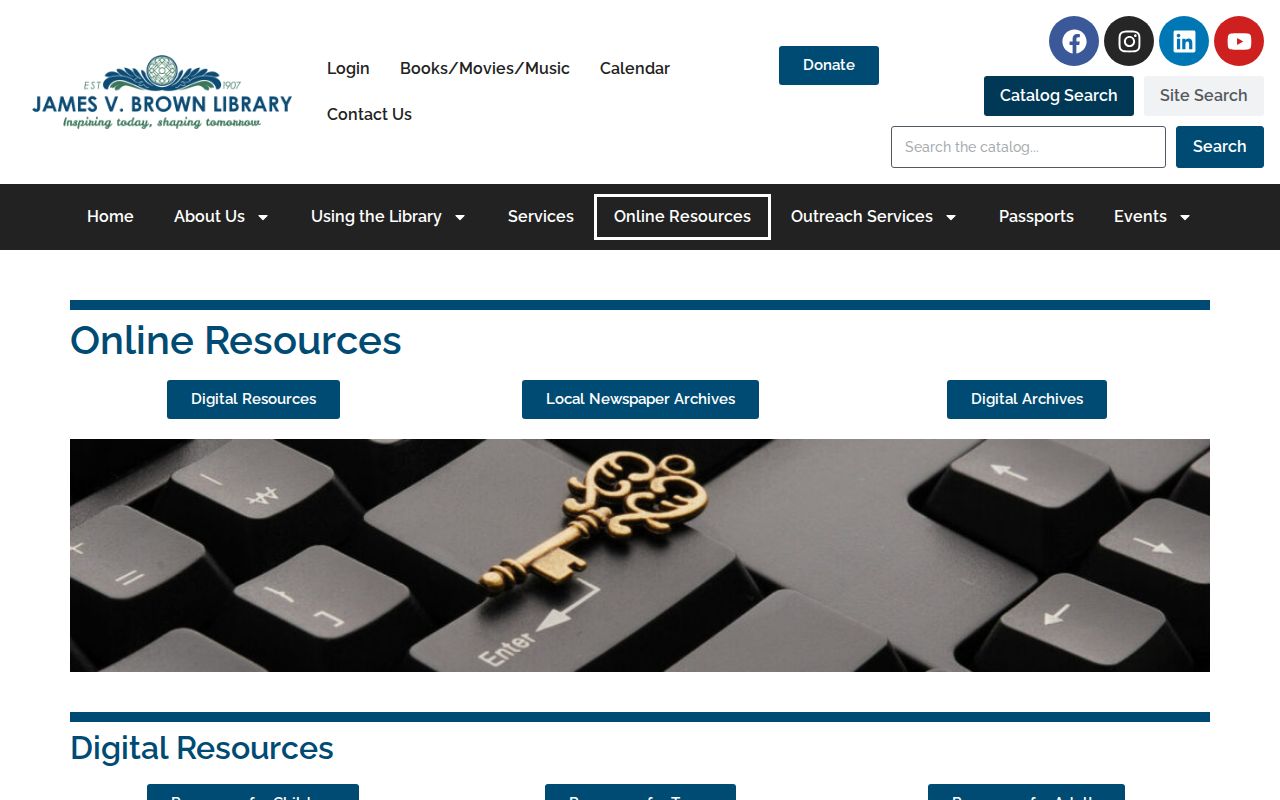
The library listing establishes the collection span, while the individual volume remains the source for its own title, year, and entry details.
The remote archive should be used as a first pass rather than as a substitute for the library counter. Record the exact search spelling, chosen year, page image, and any access message. Staff can help visitors navigate the collection, but the library’s announcements do not promise that staff will conduct a patron’s research. Confirm current research-assistance arrangements before planning a visit.
The remote public archive shows the public side of that two-channel arrangement.
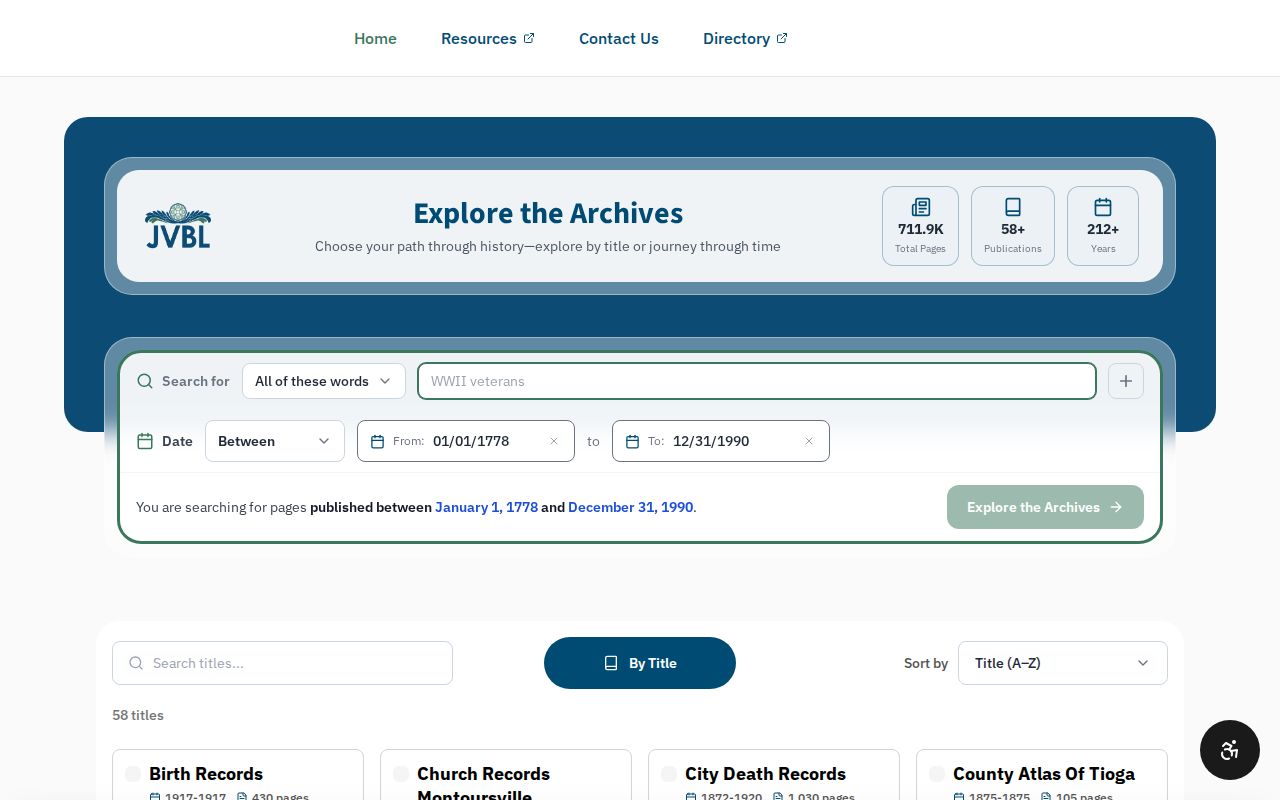
When a needed directory is not reachable remotely, the access note points toward the in-library database rather than a conclusion about the record.
Note: A public archive result and an in-library result can differ because the collection applies a rights-based access split.
Reading a Williamsport City Directory Entry
Collection-level descriptions do not display a sample Williamsport entry or its abbreviation key. That limitation matters. Historic directories often use compact marks and abbreviations, but their meaning cannot be assigned to a Williamsport volume until the selected volume’s own front matter and entry image are visible. Preserve a citation before turning an entry into a family conclusion.
| Volume identity | Read the title page for the exact title, year, and any publisher statement actually printed there. |
|---|---|
| Entry image | Save the page image or clear page reference so another reader can inspect the same text. |
| Abbreviation key | Photograph or note the volume’s own key before expanding a shortened word or mark. |
| Name and address text | Transcribe only what the selected entry visibly states, including initials and street spelling. |
| Supporting record | Compare a directory-year result with a newspaper, map, census, deed, or probate record from a compatible period. |
- City directory
- A dated published reference volume. In Williamsport, the verified library collection runs from 1866 through 1931.
- Abbreviation key
- The front-matter explanation of shorthand in a particular volume. It must be read from that volume, not assumed from another city.
- Household evidence
- A time-specific record that helps place people at an address or in a community, but does not by itself establish every person who lived there.
Do not assume that the collection has a reverse, street-order, or criss-cross section. The inspected descriptions do not verify one. Ask James V. Brown Library or Taber staff whether a specific year includes a street section before treating an address as searchable from the back of the book.
Williamsport City Directories With Newspapers
Newspapers give a useful second layer when a directory identifies a possible person or address. James V. Brown Library lists the Daily Gazette and Bulletin from 1869 to 1909, the Williamsport Sun from 1900 to 1955, and the Sun-Gazette from 1955 to the present. It also lists Grit from 1907 to 1983, among other local runs. A notice can help date a move, death, organization, or public event, but it remains period evidence rather than proof of a continuous residence.
The same library archive includes more than two thousand local historical photos and images, annual reports and board minutes, and local-history projects. Those holdings can add context around a street or family name without replacing the directory page itself. Search name variants and initials, then keep the newspaper date beside the directory year so similar names do not merge accidentally.
Note: A newspaper mention confirms what was printed on its date, not an uninterrupted stay at a Williamsport address.
Trace Williamsport Households Across Years
A dependable household trail moves one dated record at a time. The goal is not to fill every blank with a guess. Use the library directory collection for the available years, then bridge gaps with the corresponding newspaper run, federal census, map, and county record. The National Archives releases federal census records on a 72-year schedule, and 1950 is the latest released decennial census as of the research date.
- Choose the directory year closest to the known event and search the surname plus likely initials.
- Inspect the selected volume’s title page, abbreviation key, entry image, and page reference before copying details.
- Repeat in the next available Williamsport city directory year, allowing for spelling, initials, and name changes.
- Search the library’s relevant newspaper run for a dated notice that can support or challenge the directory finding.
- Pair the period with the released federal census to identify a household on that enumeration date.
- For a property trail, compare the address to a recorded instrument through Lycoming County’s SearchIQS service and its legal description.
- Keep every citation separate and label a recorded owner, a directory listing, and a census household as different kinds of evidence.
People vanish from a directory for many reasons: a move, a death, an unlisted status, a name variation, or a missing volume. Taber holdings, the newspaper archive, and county probate materials are better ways to test those possibilities than assuming a single explanation.
Williamsport City Directory Map Checks
A city directory address needs geographic context when municipal limits, street names, or parcel boundaries are in doubt. The Library of Congress record describes a Williamsport Sanborn volume dated 1912 and corrected through June 1950, later republished in 1958. Its 59 sheets include parts of Armstrong Township, Duboistown, Old Lycoming Township, and South Williamsport. That broader coverage is a reminder that a Williamsport directory label can require a map check before it is treated as an incorporated-city address.
| 1912 | Beginning date of the Williamsport Sanborn material described by the Library of Congress. |
|---|---|
| June 1950 | Correction point stated for the volume’s mapped material. |
| 1958 | Republication date stated for the described volume. |
| 1950 census | Latest released federal decennial census at the research date, subject to the 72-year release practice. |
Maps show blocks, buildings, and street context. Census schedules show a household on an enumeration date. Neither is a city directory, but both reduce the risk of attaching a directory entry to the wrong street or period.
Williamsport Archives Beyond City Directories
The Taber Museum research library and archive is the local fallback when a directory year is not digitized or the library archive’s rights boundary blocks remote access. Taber reports about 17,000 objects, 2,000 cubic feet of archival material, more than 2,000 rare documents and books, more than 20,000 photographic images, and holdings that include deeds, maps, manuscripts, local histories, and city directories. Its collection can corroborate a period question without claiming that every record is online.
Taber Museum’s collections page describes the Williamsport city directory backup holdings and research archive.

The archive’s combination of maps, deeds, photographs, and directories helps test an address or name against more than one type of historical evidence.
For institutional connections, the Lycoming College Snowden Library Archives preserves material from the Williamsport Academy, 1812 to 1848; Williamsport Dickinson Seminary, 1848 to 1928; the Seminary and Junior College, 1928 to 1947; and Lycoming College from 1948. Its yearbooks, alumni material, student newspapers, catalogues, and photo collections are useful for a school or former-classmate question, not as a general resident register.
Snowden Library Archives provides an institutional companion to Williamsport city directory research.
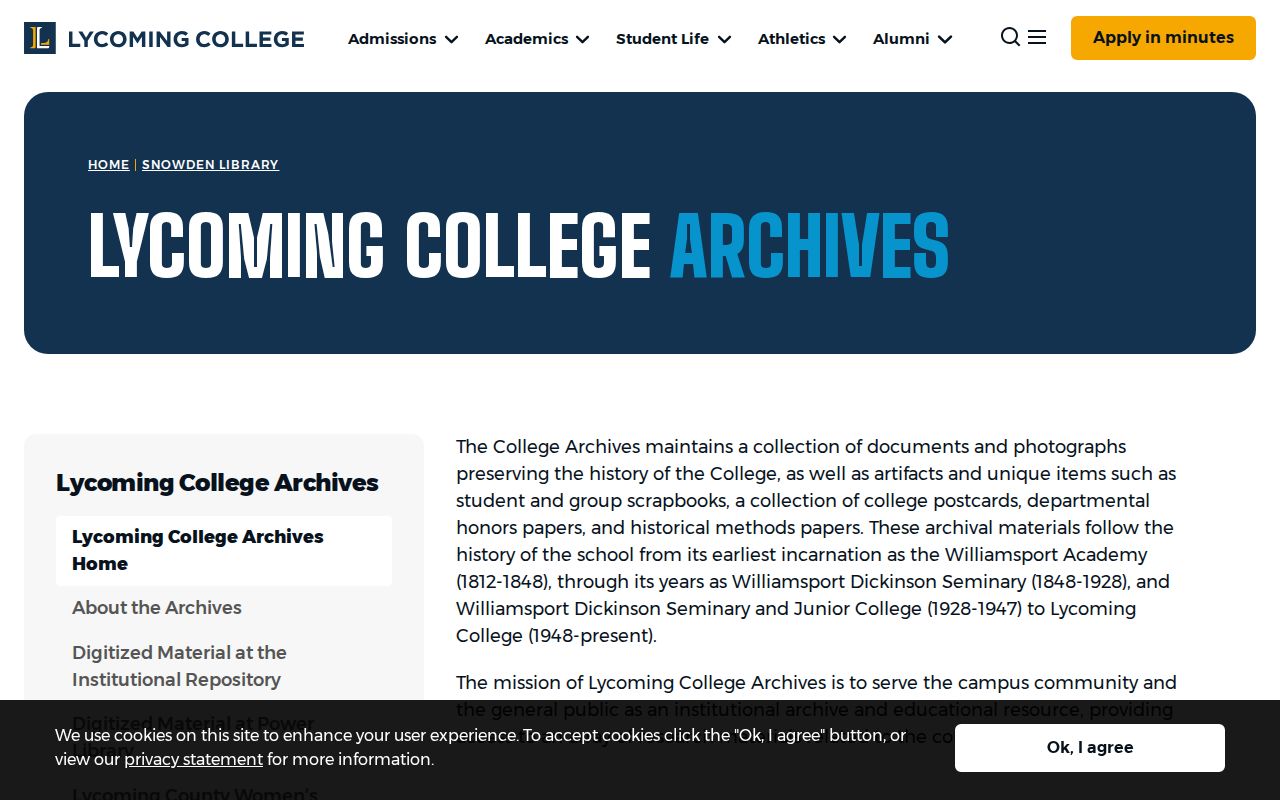
Its distinct institutional timeline can help distinguish a campus affiliation from an ordinary city-directory listing.
Williamsport City Directory Boundaries
City directories, newspapers, maps, and deeds answer different questions. A directory can preserve a dated listing. A deed identifies parties to a recorded land transaction. A Sanborn map shows physical and street context. A census captures a household on one official date. The strongest result lets those sources agree where they can and names the uncertainty where they cannot.
Williamsport has no verified local source in the research file documenting a citywide historic renumbering project. If an old address does not line up, use the legal description, subdivision or lot, map, street browse, and nearby landmarks before deciding that an address changed. This is a local quirk worth recording in a research log, not a reason to invent a renumbering date.
Note: Exact directory-entry fields and any abbreviation meanings belong to the selected volume, not the collection description.
Williamsport City Directory Research Desk
Begin remotely when the needed year is public, then move to the James V. Brown Library when the internal database or local holdings are needed. Taber is the next local archival route for directories, deeds, maps, and manuscripts. County historical materials provide the bridge from a directory clue to deeds, marriage records, wills, naturalization, or divorce files, each with its own access rules. A careful citation, a clear date, and an exact page image make the research usable later.
For an address-led investigation of a particular house, follow the recorded parcel and deed sequence on the Williamsport past residents page rather than assuming that a city directory alone identifies ownership or every household member.